
How risky is it?
- HIV – very small
- MRSA – small
- HCV – higher
- HBV – highest
Am I at risk?
This training applies to all employees who have occupational exposure to blood or other potentially infectious materials (OPIM)
-
- Occupational exposure is defined as “reasonably anticipated skin, eye, mucous membrane, or parenteral contact with blood or OPIM that may result from the performance of the employee’s duties.â€
- Blood is defined as human blood, human blood components, and products made from human blood.
- Other potentially infectious materials (OPIM) means:
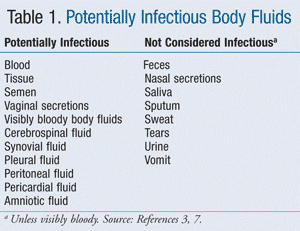
- The following human body fluids: semen, vaginal secretions, cerebrospinal fluid, synovial fluid, pleural fluid, pericardial fluid, peritoneal fluid, amniotic fluid, saliva in dental procedures, any body fluid that is visibly contaminated with blood, and all body fluids in situations where it is difficult or impossible to differentiate between body fluids;
- Any unfixed tissue or organ (other than intact skin) from a human (living or dead); and
- HIV-containing cell or tissue cultures, organ cultures, and HIV- or HBV-containing culture medium or other solutions; and blood, organs, or other tissues from experimental animals infected with HIV or HBV.
Infectious fluids
- Work with blood or OPIM
- OPIM (other potentially infectious material) – semen, vaginal secretions, saliva in dental procedures, CSF (Cerebrospinal Fluid), or other internal body fluids
Transmission in everyday life
- Sexual contact
- Sharing needles
- Transfusions
- Mom and baby
Transmission in the workplace
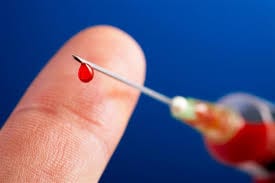
- Puncture wounds
- Contact with non-intact skin
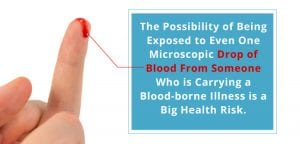
Exposure VS infection
An exposure can be defined as an injury or contact of mucous membrane or non-intact skin with blood, saliva, tissue, or other body fluids that are potentially infectious
Infections is when the body’s immune system has not efficiently fought the exposure and you now have the disease
What is considered an exposure?
- When:
- Blood, blood products, cerebral spinal fluid, semen, vaginal secretions or synovial fluid has had contact with NON-INTACT skin or mucous membranes.
- When
- You have been stuck by a contaminated needle or sharp object
What is NOT considered an exposure?
- The following is NOT an exposure (unless visible blood noted in the following)
- Feces, saliva, vomitus, sputum, sweat, urine, nasal secretions, tears, blood on INTACT skin
Acute VS chronic
- ACUTE
- extremely severe pain, brief and dangerous
- CHRONIC
- Over a long time
- Ever present or long lasting
Determinants of Disease Transmission
- Individual receiving the dose
- Virulence / type of pathogen
- Size of delivered dose (concentration)
- Route of exposure
- Type of bodily fluid
- Whether post exposure prophylaxis was administered