
- Inflammation of the liver
- Risk of HBV infection after a single positive needle stick is 30%
- Durable virus (7 days outside body)
- Acute or chronic
- More than 350 million people are chronic carriers of HBV worldwide
- (CDC) 800,000–1.4 million persons in the United States have chronic HBV infection
- Annual number of unreported infections may be 10 times greater than the number of reported (many HBV infections are either asymptomatic or never reported)
rate of new HBV infections has declined ~80% since 1991 - 8,000–10,000 deaths each year in the United States (chronic)
- 1% of population have HBV in South Africa
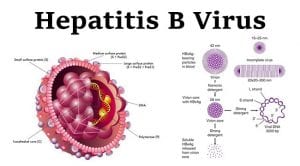
HBV is a hepadnavirus. As the name indicates, it is a DNA virus, which infects the liver and replicates in liver cells (hepatocytes). HBV is released into the bloodstream from infected hepatocytes. HBV infection may result in a long term carrier state with either mild or severe chronic liver disease including primary hepatocellular carcinoma. The virus is found all over the world with over 400 million carriers worldwide.
There are estimated to be about 1,000,000 to 1,400,000 carriers among “healthy” adults in the United States. About 1% of the population in Africa have HBV. Total infection with HBV is 5 to 10 times the carrier rate since most infections of adults result in clearance of viremia followed by immunity. Of those people who develop chronic HBV infections (6% of persons infected as adults), 15-25% will eventually die of liver disease. More than 50% of foreign-born persons in the United States from central and southeast Asia, the Middle East, and Aftica are HBV antigen positive, with 5-15% chronically infected. It is estimated that 60,000 new infections occur in the US annually. 4,000 – 5,000 deaths due to chronic liver disease occur each year, including about 200 deaths of health care workers with occupationally contracted HBV.
Blood and blood products are the most effective vehicles for the transmission of HBV. Hepatitis B surface antigen (HBsAg) has been found in virtually all body secretions and excretions, however, only blood, saliva, breast milk, semen and vaginal fluids have shown to be infectious.
Accidental direct percutaneous inoculation (needlestick or other sharp) is the most efficient HBV transmission method. Percutaneous transfer of HBV infected serum or plasma without direct puncture can occur through minute cutaneous scratches or abrasions and through contamination of mucous membranes. Indirect transfer of infective material to skin or mucous membranes can occur by way of contaminated medical devices, gloves or other environmental surfaces.
The efficiency of HBV transmission by the various methods is due to the extraordinary amount of circulating infectious HBV in the blood of infected individuals who are either in the acute phase of infection or who are HBAg carriers and are positive for Hepatitis B “e” antigen (HBeAg). The presence of HBsAg and HBeAg and of HBV viral DNA in an individual’s serum is a sign of relatively high infectivity. HBsAg and HBeAg positive human serum can be diluted a hundred million times and still induce HBV infection in experimental animals.
HBV is an extremely stable virus in the environment. Studies at the CDC demonstrated HBV in HBsAg and HBeAg positive sera remained infectious after drying on a surface at 42% relative humidity for at least a week.
Hepatitis B Vaccination
Hepatitis B vaccination provides the most effective protection from Hepatitis B virus. “Occupationally exposed” employees are strongly encouraged to receive the Hepatitis B vaccine.
Hepatitis B vaccine is 96-99% effective in preventing HBV infection. Booster doses of hepatitis B vaccine are not necessary. If a routine booster dose of Hepatitis B vaccine is recommended by the US Public Health Service at a future date, the employer must make the booster dose available to its employees. The vaccine also protects against Hepatitis D viral (HDV) infection, as HDV requires the co-existence of HBV infection for viral replication.
The vaccine is a series of three injections given intramuscularly. The second dose is given 1 month after the first. The third dose is given 5 months after the second. Remember: All three shots must be given for the vaccination to be complete. Employees must be tested for antibody to Hepatitis B surface antigen 1 to 2 months after the completion of the series. Employees who do not respond to the primary vaccination series must be revaccinated with a second three-dose vaccine series and retested. Non-responders must be medically evaluated.
The first Hepatitis B vaccine (licensed in 1982) was made from inactivated human sera from people with chronic HBV infections. This vaccine is no longer available in the United States. The newer synthetic vaccines (first licensed in 1987) are much safer. Recombinant DNA technology enabled the Hepatitis B surface antigen (HBsAg) gene to be inserted into common baker’s yeast cell DNA. These altered yeast cells produce HBV protein markers, but no complete virus particles. It is virtually impossible to become infected with bloodborne pathogens from the vaccine. No whole or live virus particles or human sera are used in the vaccine preparation.