What is a Pathogen?
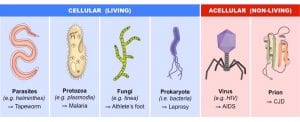
In biology, a pathogen (Greek: πάθος pathos “suffering, passion†and -γενής -genÄ“s “producer ofâ€) or a germ in the oldest and broadest sense is anything that can produce disease; the term came into use in the 1880s. Typically the term is used to describe an infectious agent such as a virus, bacterium, protozoa, prion, a fungus, or other micro-organism. The scientific study of pathogens is called Pathology.
There are several substrates including pathways where the pathogens can invade a host. The principal pathways have different episodic time frames, but soil contamination has the longest or most persistent potential for harboring a pathogen. Diseases caused by organisms in humans are known as pathogenic diseases.
- Micro-organism
- Infectious agent (germ)
- Virus
- Bacterium
- Prion
- Fungus
- Parasites
- Causes disease
What is blood borne?
Carried or transmitted by blood
- Contamination by blood
- Very difficult to determine what blood contains
- We therefore treat all blood as potentially infectious

What is a Blood borne pathogen?
Bloodborne pathogens are infectious microorganisms in human blood that can cause disease in humans.  Needlesticks and other sharps-related injuries may expose workers to bloodborne pathogens
Examples
- malaria
- syphilis
- Hepatitis B Virus(HBV)
- Hepatitis C Virus
- Human Immunodeficiency Virus (HIV)